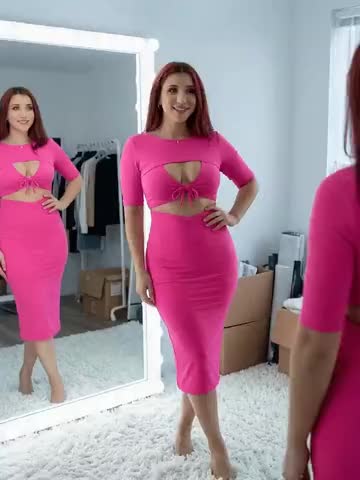

You can make money without showing your face, and in 2026 there are more credible ways to do it than ever. The catch is that most faceless income models cap out fast or still leak your identity somewhere along the chain. This guide compares the realistic options, explains why the AI creator has become the cleanest faceless model, and covers how to actually stay anonymous, not just off-camera, while the money moves.
Why people want a faceless income
The reasons are practical, not paranoid. Some have a day job or a profession where a public creator presence would cause problems. Others have family or community reasons to keep an income stream private. Plenty just do not want their identity permanently welded to content that lives on the internet forever. Each reason is valid, and none of them should mean giving up the income.
The mistake is assuming faceless means low effort or a low ceiling. The best faceless models are real businesses that happen not to need a face, and a few out-earn the on-camera version because they remove the biggest bottleneck of all: a specific human who has to be present for the work to happen.
The realistic faceless income models
Not every faceless model is equal. Here is an honest comparison of the main ones, ceilings and bottlenecks included.
| Faceless model | How it earns | Realistic ceiling | Main bottleneck |
|---|---|---|---|
| Faceless YouTube / short-form | Ad revenue and sponsorships | Medium | Slow to build; the algorithm controls reach |
| Print-on-demand / digital products | Per-sale margin | Low to medium | Crowded market, thin margins |
| Affiliate / niche content sites | Referral commissions | Medium | Months to rank; search traffic you do not own |
| AI creator persona | Subscriptions, pay-per-view, tips | High | Promotion and the slow early build |
Faceless video can earn real money, but ad rates swing with the niche (often only a few dollars per thousand views) and the build is slow. Print-on-demand and digital products are genuinely faceless, yet the market is crowded and the margins are thin once production and platform fees come out. Affiliate and niche sites can compound nicely, though ranking takes the better part of a year and leans on search traffic you cannot control.
The model that changed the math is the AI creator. Instead of filming faceless clips or stocking a store, you run a generated persona that earns the way a creator does: subscriptions, content, conversation, no real person on camera. The persona is the face, and the persona is not you.
Why AI creators are the cleanest faceless model
An AI creator is a faceless content creator by design rather than by workaround. Nothing to film from the neck down, no logo to hide behind, no voice changer. The persona is fully synthetic, so the question of showing your face never comes up at all. You run the business; the persona is the public-facing product. This is the model we cover in depth in our guide to what an AI influencer is.
The ceiling sits higher than most faceless options because it monetises like a creator. A faceless YouTube channel lives on ad rates. An AI persona earns on subscriptions (commonly in the $5-15 a month range), pay-per-view content, and tips, with the fan platform taking the industry-standard 20% cut that OnlyFans, Fanvue, and Fansly all charge. The cost side helps too: generated content has near-zero marginal cost, which is the foundation of the economics of AI influencers.
Faceless is not the same as anonymous
This is the part most guides skip, and it is the part that matters most. Not showing your face on camera is easy. Staying genuinely anonymous, so your real identity cannot be traced through the business, takes deliberate structure.
Money has to move from a platform to your bank without a paper trail that exposes you. Accounts have to be created without tying back to your personal identity, and every promotion post has to avoid linking the persona to you. Doing it properly means operating through a business entity rather than as yourself, keeping business and personal finances apart, and staying disciplined about device and account separation. The full operational stack is laid out in our anonymous AI business guide. The point to hold onto: anonymity is an active choice you build in from the start, not something that happens by itself because you are off-camera.
How an AI creator income actually works
In practice the model is straightforward. A persona is designed and made consistent, a content library is produced, and the persona is set up on a platform that welcomes AI creators. It builds a social following, and that following converts into paying fans on the monetisation profile. An operator runs the business, replies to messages, and drives promotion, none of which needs a camera. Its mechanics overlap heavily with running an AI creator on a fan platform.
Income does not arrive instantly. The first months are audience-building, and the curve stays flat before it compounds. What makes it work for a faceless operator is the shape of the thing: a high ceiling, repeatable work, and an identity that never becomes part of the product.
Common mistakes with faceless income
The most expensive mistake is picking a model with a low ceiling and then being surprised when it caps out. Right behind it is confusing off-camera with anonymous, and leaking your identity through a payment account or a promotion post that points back at you. The third is expecting fast money; every real income model, faceless or not, takes time. Sidestep those and most of the battle is won.
How long before a faceless income pays?
Set expectations honestly. A faceless income built on an AI creator is not fast money. The first months are audience-building, and meaningful income usually arrives once the persona has a following large enough to convert into paying fans. The operators who make it treat the early period as investment, posting and promoting daily before the returns show up. Quitting in month two, when the numbers are still small, is the single most common reason people fail at this, and it has nothing to do with the model.
Build the business structure early, before the income arrives, so you are compliant from the first payout. In the UK that means registering properly and following the gov.uk guidance on setting up a business; in the US it usually means an LLC. Getting the structure in place while the income is still small beats retrofitting it later, and it is what keeps the faceless model both anonymous and above board.
Ranking the faceless options by ceiling
Line the faceless models up by how high they can realistically go and the picture is clear. Print-on-demand and digital products are genuinely faceless but margin-thin and crowded. Faceless video scales, then hits the wall of ad rates and an algorithm you do not control. Affiliate and niche sites can earn well but need time and search traffic you cannot steer. The AI creator model sits at the top of that range because it monetises like a creator, through subscriptions, pay-per-view, and tips, while keeping the operator completely off-camera.
No model is effortless, and anyone promising effortless faceless income is selling something. What sets the AI creator approach apart is the pairing of a high ceiling with genuine facelessness, which is rare. Most high-ceiling income models eventually pull you on-camera or into a public role. The AI persona never does, because the persona is the public face and the persona is not a real person. That is the structural reason it has become the default answer for operators who want real income without exposure.
The bottom line
Making money without showing your face is realistic, and the AI creator model is the cleanest version because the persona is synthetic and the ceiling is high. The work that decides the outcome is choosing a model with a real ceiling and building genuine anonymity into the structure from day one.
Hunaipot builds and runs the persona, the content, and the platform so you can earn from an AI creator business while staying completely anonymous, the owner, never the face. Get your AI creator built for you.